About the Research
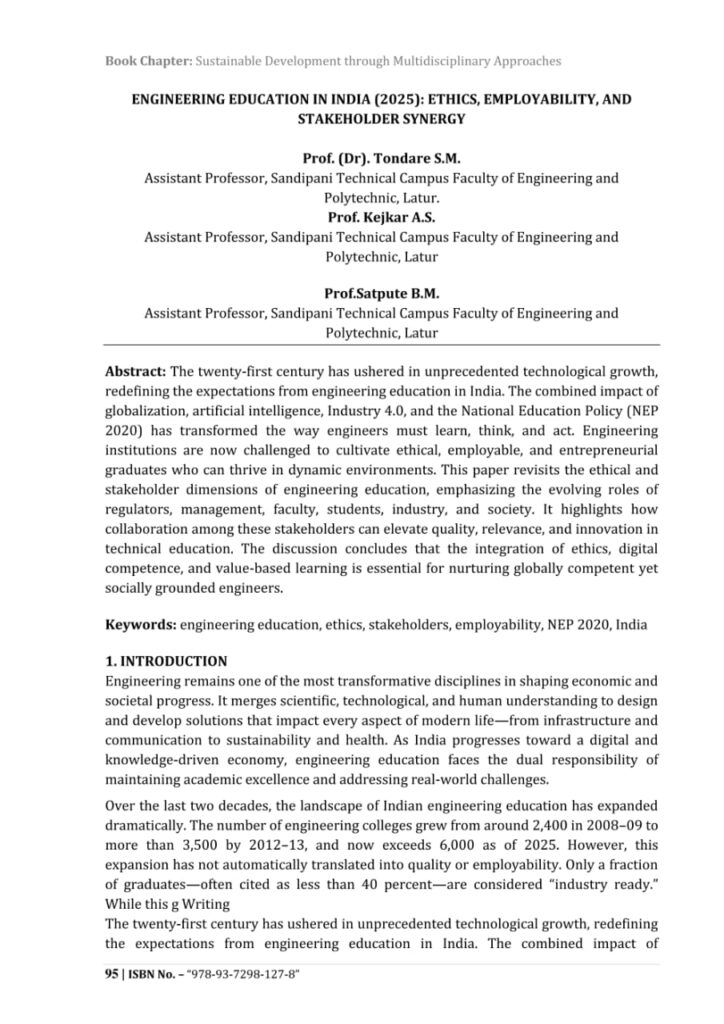
This research by Prof. (Dr.) S.M. Tondare, Prof. A.S. Kejkar, and Prof. B.M. Satpute from Sandipani Technical Campus, Latur, explores the evolving landscape of engineering education in India. In the era of rapid technological advancement, globalization, and Industry 4.0, the study highlights the need for a balanced approach that integrates ethics, employability skills, and collaborative stakeholder engagement.
Key Highlights
- Impact of NEP 2020 on engineering education
- Role of ethics and value-based learning
- Employability challenges among graduates
- Importance of stakeholder collaboration (academia, industry, society)
- Need for digital and practical competencies
Objective
To analyze how engineering education in India can be improved by integrating ethical values, enhancing employability, and strengthening coordination among key stakeholders.
Conclusion
The study concludes that future-ready engineers require more than technical knowledge. A strong foundation in ethics, skills, and collaboration is essential to meet global standards and societal needs.
Authors
Prof. (Dr.) S.M. Tondare
Prof. A.S. Kejkar
Prof. B.M. Satpute